Framing Windows
As they say, “they don’t build ’em like they used to.” While some of this is for the worse, much is for the better.
Take our windows, for example.
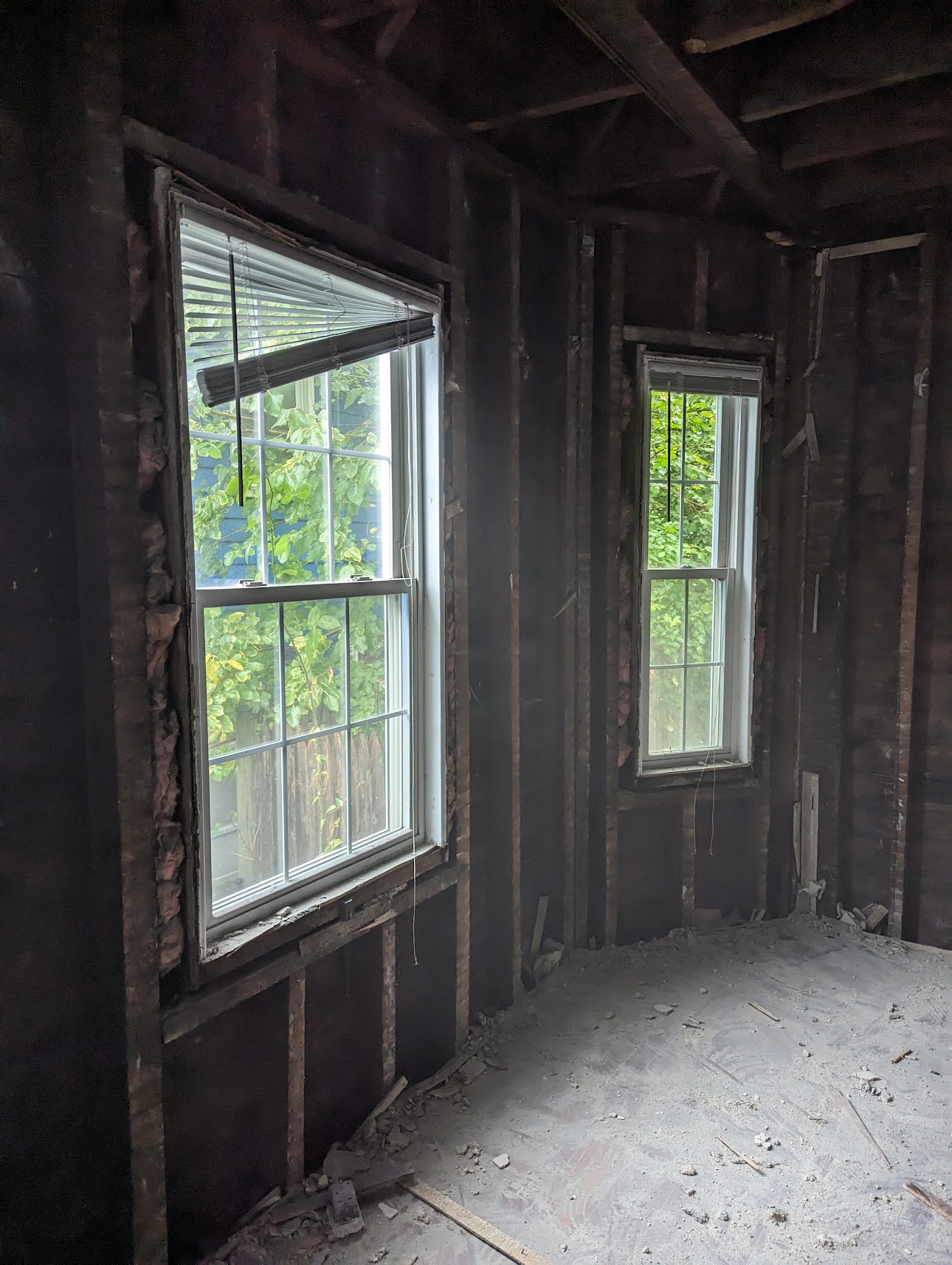
The old window framing in our house looked like this:
And reframed, like this:
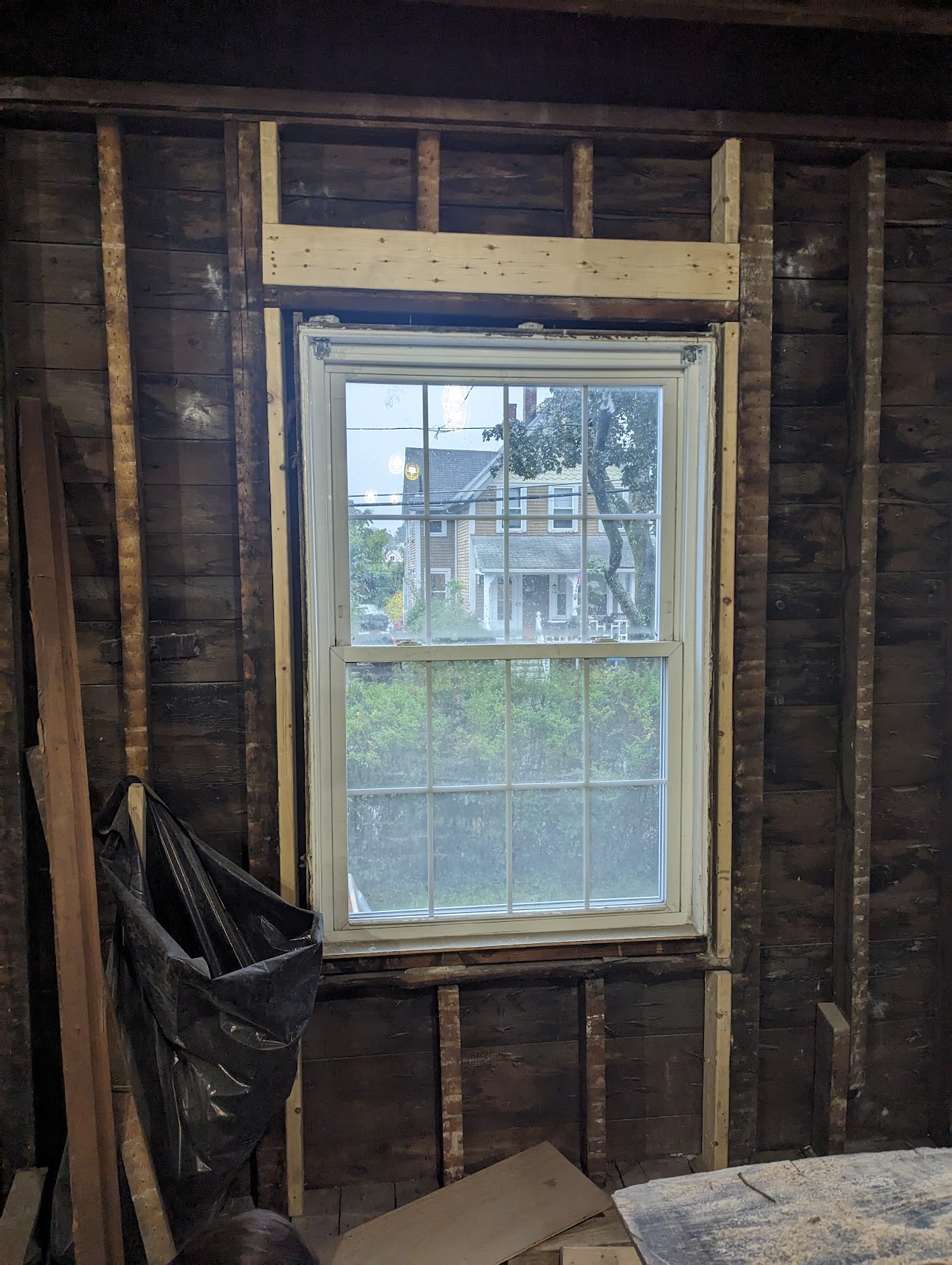
The framing has helpfully color-coded itself. The carpenter added a header (the horizontal member above the window), jack studs (the vertical members on either side of the window), and some cripple studs (the vertical members above the header - two were in place from before).
It’s visually evident how this new framing is sturdier. The header is much thicker than it was before (it barely qualified as a header before). This transfers the load from the upper stories to the studs with less deflection. Then, the new jack studs transmit the load to the foundation. By contrast, the old framing was almost as if we had just removed the two studs in the middle altogether.
However! More wood in the walls is not always better - in fact, all things being equal it’s actually worse. The main reason for this is insulation (a secondary reason is cost). The R-value of a material is the ratio between the temperature differential across the material and the heat flux through the material. In other words, if you double the R-value of a wall, you’ll consume half as much energy to keep the room warm1. Wood has an R-value of a little over 1 per inch. Closed-cell spray foam has an R-value of 6.5-7 per inch! In a standard wall, studs reduce the R-value by 15-20%. This is a significant enough effect that there’s a subfield of building science dedicated to stud spacing optimization and “advanced framing” which aims to minimize the amount of wood in the walls.
That said, the existing window framing was not up to code. If we really cared about this, we might have been able to get a structural engineer to figure out the exactly optimal solution, but that certainly wouldn’t have been worth the cost or hassle.
We’ve also opted to keep the existing windows in place. Although new windows would be much more efficient, these windows were installed relatively recently and will hopefully be fine for now. We’ll know more when we do the blower door test to see how well the house is sealed.
Of course, this is a simplification. Most importantly, the R-value doesn’t account for air sealing - if cold air from outside can directly enter the room, it doesn’t matter if the wall can block heat from going through. ↩︎